You are here: Skip Navigation LinksMedical Informatics Center

Projects

​Our department is involved in various research projects that we carry out with different partners at the Medical Center, in Germany, and at​ the international level. You can find a selection below.​​​

Current projects:​​

Private AIM (04/2023 – 03/2027)

PrivateAIM — Privacy-Preserving Analytics In Medicine

Project Period: 04/2023–03/2027
Funding Agency: Federal Ministry for Research, Technology and Space

Project Descript​​ion:

PrivateAIM​ aims to develop a federated platform for the analysis of medical data within the framework of the M​edical Informatics Initiative (MII). The processing of patient data without their explicit consent in the data integration centers of MII partners is only permissible if the anonymity of the individuals concerned is preserved.

To address this challenge, PrivateAIM brings together expertise in federated data analysis and innovativ​​e data protection concepts. Currently available methods do not fully meet the requirements for data privacy and security. Therefore, PrivateAIM is working to extend these methods through multimodal data functionalities, comprehensive analytical capabilities, and a distributed infrastructure that ensures monitoring, control, and compliance with stringent data protection standards.

Through this innovative approach, PrivateAIM makes a significant contribution to medical research and aims to improve the quality of patient care in the long term.

​Team Mem​​​​​​bers: 

​Project Par​tners:

  • University Medicine Berlin (Charité) (Prof. Dr. Fabian Prasser)
  • Helmholtz Center for Information Security (CISPA) (Prof. Dr. Mario Fritz)
  • German Cancer Research Center (DKFZ) (Dr. Ralf Omar Floca)
  • Eberhard Karls University of Tübingen (EKUT) (Prof. Dr. Nico Pfeifer)
  • Ludwig-Maximilians-University Munich (LMU) (Prof. Dr. Ulrich Mansmann)
  • TMF – Technologie- und Methodenplattform für die vernetzte medizinische Forschung e.V (Dr. Sebastian Claudius Semler)
  • Technical University of Munich (TUM) (Prof. Dr. Daniel Rückert)
  • University Hospital Erlangen (UKER) (Prof. Dr. Thomas Ganslandt)
  • University Medical Center Freiburg (UKFR) (Prof. Dr. Harald Binder)
  • University Hospital Heidelberg (UKHD) (Prof. Dr. Christoph Dieterich)
  • University of Cologne (UKK) (Prof. Dr. Oya Beyan)
  • University Hospital Tübingen (UKT) (Prof. Dr. Oliver Kohlbacher)
  • University Hospital Ulm (UKU) (Prof. Dr. Hans Kestler)
  • University Medical Center Mannheim, Heidelberg University (Prof. Dr. Martin Lablans)
  • University Medical Center Essen (UKE) (Dr. Michael Kamp)
  • University Medical Center Schleswig-Holstein (UKSH) (Prof. Dr. Björn Schreiweis)

​​Resu​lts: 


Figure 1: Overview over the FLAME architecture (​Source​)

The initial outcome is the development of a federated platform for the analysis of medical data, named FLAME. This platform can be broadly divided into a central component, the so-called Hub, and multiple decentralized components, referred to as Nodes. A user initiates an analysis via the Hub, which then generates a task and distributes it to all​​ participating Nodes. Each Node is part of the infrastructure of a hospital and has access to patient data, allowing these data to be used for analysis. The results are aggregated and sent back to the Hub, where they are made available to the analyst. Examples and further information regarding the FLAME platform can be found here.

The PrivateAIM project is c​​urrently ongoing and is expected to continue until 2027. Results will be updated as the project progresses.

​Publicatio​ns:

  • Welten​​​ S, de Arruda Botelho Herr M, Hempel L, Hieber D, Placzek P, Graf M, Weber S, Neumann L, Jugl ​M, Tirpitz L, Kindermann K, Geisler S, Bonino da Silva Santos LO, Decker S, Pfeifer N, Kohlbacher O, Kirsten T A study on interoperability between two Personal Health Train infrastructures in leukodystrophy data analysis. Sci Data 11, 663, 2024. DOI:10.1038/s41597-024-03450-6.
  • Herr, M., Graf, M., Placzek, P., König, F., Bötte, F., Stickel, T., Hieber, D., Zimmermann, L., Slupina, M., Mohr, C., Biergans, S., Akgün, M., Pfeifer, N., & Kohlbacher, O. (2022)
  • Bringing the Algorithms to the Data - Secure Distributed Medical Analytics using the Personal Health Train (PHT-meDIC). arXiv (Cornell University). Read Paper​ 
  • Ziller, A., Trask, A., Lopardo, A., Szymkow, B., Wagner, B., Bluemke, E., Nounahon, J., Passerat-Palmbach, J., Prakash, K., Rose, N., Ryffel, T., Reza, Z. N., & Kaissis, G. (2021). PySyft: A Library for Easy Federated Learning. In Springer eBooks (pp. 111–139). Read Paper 
  • Kaissis, G., Ziller, A., Passerat-Palmbach, J., Ryffel, T., Usynin, D., Trask, A., Lima, I., Mancuso, J., Jungmann, F., Steinborn, M., Saleh, A., Makowski, M. R., Rueckert, D., & Braren, R. (2021). End-to-end privacy preserving deep learning on multi-institutional medical imaging. Nature Machine Intelligence, 3(6), 473–484. Read Paper
  • Prasser, F., Kohlmayer, F., Lautenschläger, R., & Kuhn, K. A. (2014). ARX - A comprehensive tool for anonymizing biomedical data. In AMIA Annual Symposium Proceedings (Vol. 2014, p. 984). American Medical Informatics Association. [Washington DC, 15.-19. November 2014: AMIA Annual Symposium, 2014] Read Paper
  • Wirth, F., Meurers, T., Johns, M., & Prasser, F. (2021). Privacy-preserving data sharing infrastructures for medical research: systematization and comparison. BMC Medical Informatics and Decision Making, 21(1). Read Paper 
  • Scherer, J., Nolden, M., Kleesiek, J., Metzger, J., Kades, K., Schneider, V., Bach, M., Sedlaczek, O., Bucher, A. M., Vogl, T. J., Grünwald, F., Kuhn, J., Hoffmann, R., Kotzerke, J., Bethge, O. T., Schimmöller, L., Antoch, G., Müller, H., Daul, A., . . . Maier-Hein, K. H. (2020). Joint Imaging Platform for Federated Clinical Data Analytics. JCO Clinical Cancer Informatics, 4, 1027–1038.

Come2Data (11/2024 – 11/2026)

Come2Data – Competence Center for Interdisciplinary Data Sciences

Project Period: 11/2024 – 11/2026
Funding Agency: Federal Ministry of Research, Technology, and Space & European Union

Project Description:

As a data competence center (DKZ), Come2Data pursues a Saxonian-regional approach to convey practice-oriented data competences primarily to science, but also to the areas of administration and interested public and, in the long term, to the economy. Come2Data brings together existi​​ng data science training and support services as well as expertise and commitment to research data management, the National Research Data Infrastructure (NFDI), high-performance computing and analysis methods for data-intensive interdisciplinary research applications such as artificial intelligence and data modelling. 

The diverse local, regional and national activities that exist in Saxony will be consolidated and synergized into a sustainable offering. The basis is a comprehensive training and support program in the fields of data integration, data management, dat​​a analysis and data publication. Come2Data creates an open research, support, networking and learning center across all Saxon locations in order to make the consolidated training, support and knowledge offering available to researchers, teachers and learners as well as to the public via a central virtual platform.

Team M​embers:

Project Partners:

  • Center for Information Services and High-Performance Computing at Technische Universität Dresden
  • Technische Universität Dresden (Prof. Dr. Lars Bernard)
  • Technische Universität Chemnitz (Dr. Ralph Müller-Pfefferkorn)
  • Saxon State and University Library Dresden (SLUB)
  • State Initiative “SaxFDM – Research Data Management in Saxony”
  • ScaDS.AI Dresden/Leipzig – Center for Scalable Data Analytics and Artificial Intelligence Dresden/Leipzig (Prof. Dr. Erhard Rahm, Matthias Täuschner, Dr. Mike Berger, Pia Voigt)
  • DRESDEN-concept e.V.
  • NFDI4Earth – NFDI Consortium Earth System Sciences

Resul​​ts:

Early results in the Come2Data pilot project „AI in Medicine“:

  • Design and implementation of a prototype for a Trusted Research Environment (TRE) in collaboration with the University Computing Center (URZ) to enable secure computation for research involving sensitive patient data.
  • Organization of a Python training for medical professionals in collaboration with ScaDS.AI and EKFZ to gain hands-on experience in data analysis and AI applications.
  • Development of a domain-specific knowledge database for the collection of methods, resources, and best practices in medical data science.
  • Support for the MII Academy to promote data literacy.
  • Collection of domain-specific data problems, which are fed into the internal ticket system and processed by the helpdesk/experts.​

Referenc​​​es:

MASLD (09/2024 – 04/2026)

MASLD – Implementation of the guideline-recommended screening algorithm for advanced liver fibrosis in patients with fatty liver disease due to metabolic dysfunction

Project Duration: 09/2024 – 04/2026 
Funding Agency: Internal project

Project Description:

Metabolic dysfunction-associated steatotic liver disease (MASLD) is one of the most common causes of elevated liver function values in Western countries, affecting up to a quarter of the adult population and posing major challenges for the healthcare system. However, only a small proportion of those affected develop liver fibrosis or cirrhosis as the disease progresses, making it necessary to specifically identify patients at risk. 

​The project aims to evaluate the effectiveness of a simple screening algorithm recommended by the international professional society for the early detection of severe liver damage in MASLD​​​ patients in clinical practice. To this end, data from patients who have been referred to University of Leipzig Medical Center ​since 2014 will be evaluated retrospectively. The analysis will focus on the FIB-4 score, FAST score, and liver stiffness measurement as primary screening instruments, as well as on the patients’ subsequent clinical courses. 

This project therefore contributes to optimizing care and to the early identification of patients at high risk of severe liver disease.​

Team Member:

Dr. Sabrina Friebe (sabrina.friebe@medizin.uni-leipzig.de​)

Project Partners: 

  • University of Leipzig Medical Center, Medical Department II​, Division of Hepatology (Prof. Dr. Johannes Wiegand, Prof. Dr. Thomas Berg, Dr. Eva Messer)
  • University of Leipzig Medical Cente​r, Medical Department II​​, Division of Gastroenterology​ (Prof. Dr. Thomas Karlas)
  • Leipzig University, Center for Clinical Studies (Dr. David Petroff)
  • Leipzig University, Institute of Laboratory Medicine, Clinical Chemistry and Molecular Diagnostics (Dr. Martin Federbusch)
  • University of Leipzig Medical Center, Data Integration Center​ (Dr. Thomas Wendt)

PATH (12/2022 – 12/2025)

PATH (Personal Mastery Health & Wellness Data) 

Project Period: 12/2022 – 12/2025
Funding Agency: Federal Ministry for Research, Technology and Space

Project D​escription:

The PATH project aims to unlock the full potential of digital health data for both individual care and public-health research.​ To achieve this, a GDPR-compliant, user-friendly platform is being develope​d to link personal health records with data from everyday devices such as smartwatches, home tests, and health apps.

At its core, the project focuses on creating secure infrastructures, known as “data hubs,” that integrate medically documented data with self-tracked health information—always under the full control of the individual user. A graphical dashboard provides users with a clear and accessible overview of t​​heir health data, empowering them to decide independently if and how their data is shared—whether for personal health benefits (primary use) or for research purposes (secondary use).

Innovation Through D​​igital Inte​​​gration

PATH establishes, for the first time, a bridge between traditional clinical data and personally generated health data. T​​his integration opens new possibilities for:

  • Personalized medicine and preventive care
  • Data-driven research and development of new medical products
  • Post-market surveillance to assess the safety and effectiveness of medical devices

The platform is fully GDPR-compliant and offers open-source modules to manage consent, control data usage​​, and ensure transparency. Particular emphasis is placed on meaningful and traceable consent, building trust and enabling active participation by individuals.

Scientifically Grounded and Practically Tested

PATH is based on the hypothesis t​​hat the willingness to share personal health data largely depends on whether individuals retain control and are offered clear, meaningful ways to manage their data. To test this hypothesis, the developed solutions are validated through real-world clinical case studies involving patients with diabetes and mental health conditions.

The Medical Data Science dep​artment of the Faculty of Medicine at Leipzig University is responsible for one sub-project and is dedicated to developing a digital solution for managing consents.

​O​​utlook

In an evolving healthcare landscape, PATH creates an infrastructure that enables individuals to use their health da​ta safely, transparently, and meaningfully—for their own benefit and for the common good. The project makes a key contribution to the development of a European Health Data Space and to the responsible digital transformation of medicine.

Team members:

  • Masoud Abedi (Masoud.Abedi@medizin.uni-leipzig.de)
  • Aniruddha Deshmukh

​Project Partners:

  • ​Else Kröner Fresenius Center for Digital Health (EKFZ) (Stefanie Brückner, Akrem Dridi, Prof. Dr. Stephen Gilbert, Dr. Cindy Welzel)
  • Institute of International Law, Intellectual Property and Technology Law, TUD Dresden University of Technology Dresden (Prof. Dr. Anne Lauber-Rönsberg, Ronja Riedel, Dr. Sven Hetmank)
  • Ada Health GmbH, Berlin
  • Una Health GmbH
  • Movisens GmbH

Resul​​ts:

We have contributed to the novel Standard Health Consent (SHC) and worked on the its implementation r​​​​esulting in different software components. The figure below shows the high-level system architecture. The SHC Connect is a module that can be included in third party apps to capture app-specific consent. The SHC Connect points to the SHC Service managing and persisting all captured consent information.​


Public​ations:

  • Welzel C, Ostermann M, Smith HL, Minssen T, Kirsten T, Gilbert S Enabling secure and self determined health data sharing and consent management. npj Digit. Med. 8, 560, 2025. DOI:10.1038/s41746-025-01945-z.
  • Brückner S, Kirsten T, Schwarz P, Cotte F, Tsesis M, Gilbert S The Social Contract for Health and Wellness Data Sharing Needs a Trusted Standardized Consent. Mayo Clinic Proceedings: Digital Health 1, 527–533, 2023. DOI:10.1016/j.mcpdig.2023.07.008.​​

VICI -VTE (11/2024 – present)

VICI-VTE – Venous Thromboembolism

Project Period: 11/2024 – present 
Funding Agency: Internal project

Project Description:​

The VICI-VTE project focuses on researchin​g venous thromboembolism (VTE) in children and adolescents under the age of 20 in Germany, with a particular emphasis on deep vein thrombosis (DVT) and pulmonary embolism (PE). VTE refers to blood clots that block the blood flow system in the veins and can be life-threatening in the worst case. Although VTE is rare in young people, it should be taken especially seriously as it often indicates particular risk factors or underlying conditions.

The project aims to comprehensively analyze the frequency, risk factors, and comorbidities of VTE to improve treatment outcomes ​​and therapies. To this end, inpatient case numbers from the Federal Statistical Office from 2021 to 2023 are being evaluated to identify differences by gender and age group. The project focuses particularly on in-hospital mortality from pulmonary embolism, complications such as cor pulmonale, and various treatment methods, including systemic thrombolysis and endoluminal procedures. 

Thus, the project provides important insights into the current care situation and supports the targeted optimiza​tion of VTE treatment for children and adolescents.

Team ​​Member:


Project Partne​r:

University of Leipzig Medical Center, Department of Angiology (Priv.-Doz. Dr. med. habil. Eva Freisinger)

Leuko FTLD (09/2024 – present)

LeukoFTLD

Project Period: 09/2024 – today
Funding Agency: Internal project

Project Description​​:

The objective of the project is to investigate white matter alterations in the brain associated with frontotemporal lobar degeneration (FTLD) using magnetic resonance imaging (MRI) and deep l​earning techniques. White matter consists of nerve fibers that connect different regions of the brain; damage to this structure can lead to impairments in memory, language, or behavior.

The study focuses on identifying patterns linked to specific disease subtypes or phenotypes. This approach aims to detect​ potential overlaps or associations with leukodystrophies, which are rare genetic disorders affecting the white matter.

​Additionally, the project evaluates the applicability ​​​of the HeteroMRI method to classify MRI data from the FTLD consortium based on the presence of white matter abnormalities. The long-term goal is to develop novel diagnostic tools and deepen the pathophysiological understanding of this heterogeneous group of disorders.

Team members: 

​Project p​​artners: 

  • University of Leipzig Medical Center, Department of Neurology​ (Dr. med. Wolfgang Köhler)
  • Max Planck Institute for Human Cognitive and Brain Sciences (Prof. Dr. med. Dr. phil. Matthias Schroeter, Dr. Qiong Wu)
  • Department of Neurology, Medical University of Vienna, Austria (Dr. Markus Ponleitner)

Resu​lts:

N/A

Publicati​ons:

Wu, Q., Ponleitner, M., Shekarchizadeh, N., Mueller, K., Zhang, X., Anderl-Straub, S., Danek, A., Diehl-Schmid, J., Fassbender, K., Fliessbach, K., Kornhuber, J., Jahn, H., Kassubeck, J., Lauer, M., Levin, J., Prudlo, J., Synofzik, M., Wiltfang, J., Weishaupt, J., FTLD Consortium Germany, Otto, M., Köhler, W., & Schroeter, M. L., Prevalence of white matter hyperintensities varies across the frontotemporal lobar degeneration & Alzheimer’s disease spectrum: A multicenter study. In submission.

Hetero MRI (01/2024 – present)

HeteroMRI

Project Period: 01/2024 – today
Funding Agency: Internal project

Project Descrip​​tion:

The HeteroMRI project originated within the LEUKO-Expert project​ and continues as part of the Tag-White project. Magnetic Resonance Imaging (MRI) is widely used to analyze white matter abnormalities in the human brain. However, MRI data often vary considerably between scanners and acquisition protocols. This variability (heterogeneity) poses major challenges for automated image analysis and for training machine learning models, especially when data are limited—as is often the case in rare diseases.

This project addresses this issue by developing a deep learning method capable of robustly classifying white matter abnormaliti​​es across multi-scanner brain MRI datasets. The method has the potential to be trained and evaluated for classifying diseases that cause white matter changes in the brain, such as in leukodystrophies and multiple sclerosis.

To address this issue, the project ​developed HeteroMRI, a deep learning method designed to robustly classify white matter abnormalities across MRI data from multiple scanners. The goal is to enable reliable automated analysis of diseases that affect white matter, such as leukodystrophies and multiple sclerosis, while minimizing the influence of scanner-specific differences.

Team members: 

​Project Partners: 

  • University of Leipzig Medical Center, Department of Neurology (Dr. med. Wolfgang Köhler, Dr. med. Christa-Caroline Bergner, Dr. med. Julia Lier)
  • Max Planck Institute for Human Cognitive and Brain Sciences (Dr. Nico Scherf)
  • Full Brain Picture Analytics (Dr. Pierre-Louis Bazin)

Res​ults:

Following the project’s aim, the team developed and evaluated HeteroMRI as a deep learning method for classifying MRI scans based on white matter abnormalities in the brain. Initiall​y, the method was tested for distinguishing between MRIs with and without white matter abnormalities.

HeteroMRI demonstrates that robust classification of white matter abnormalities is feasible even in heterogeneou​​​s, multi-scanner MRI data—without requiring additional preprocessing or harmonization methods. The approach shows a high degree of scanner and protocol independence and proves to be generalizable to previously unseen MRI acquisition settings.

The full implementation has been released as open-source software to promote transparency, reproducibility, an​​d further research.


Figure 1: Overview of the methodology.
(A) Input data: The MRI datasets used for the classification model and MNI brain template [61, 62]. The MRI data with and without WM abnormality are taken from the datasets shown in red and green, respectively. (B) MRI preprocessing: The N4 bias field correction method [28] is applied on the FLAIR MRIs (in 3D), and then the MRIs are 3 times registered (nonlinearly) to the MNI template. (C) Intensity clustering: The WM of the brain is extracted, and the WM is clustered into 3 intensity clusters using the RFCM [63] algorithm. (D) DL model: Only cluster 3 of the WM is thresholded and used for a binary classification model with the CNN architecture shown.

Publicati​ons: 

  • Masoud Abedi, Navid Shekarchizadeh, Pierre-Louis Bazin, Nico Scherf, Julia Lier, Christa-Ca​roline Bergner, Wolfgang Köhler, and Toralf Kirsten, HeteroMRI: Robust white matter abnormality classification across multi-scanner MRI data, GigaScience, Volume 14, 2025, giaf092, Read paper

NutriScoPe (11/2024 – 10/2025)

NutriScoPe – Automated diagnosis of malnutrition (nutritional scoring) in inpatients

Project Period: 11/2024 – 10/2025 
Funding Agency: TMF e.V.

Project Description​​​​:

NutriScoPe is a retrospective study examining the occurrence of malnutrition in patients across va​​​rious hospital departments and assessing the impact of systematic nutritional assessment and therapy on treatment outcomes.

Malnutrition affects up to 20–30% of hospitalized patients and is associated with longer hospital stays, higher costs, and i​ncreased mortality—particularly in patients with malignant diseases or chronic organ failure. To address these risks, a dedicated nutrition team was established at the University of Leipzig Medical Center (UKL) to provide targeted support to patients during their inpatient stay.

At UKL, patients at increased risk ​​of malnutrition are identified using a standardized procedure called Nutritional Risk Screening (NRS). Upon hospital admission, patients undergo an initial prescreening, and if abnormalities are detected, a main screening follows. Patients diagnosed with malnutrition then receive targeted nutritional therapy from the nutrition team. In contrast, no systematic NRS screening is currently implemented at Jena University Hospital (UKJ).

The study utilizes medical documentation data from both hospitals to analyze the prevalence of malnutrition, its distribution ac​​ross different clinical departments, and the effects of automated Nutritional Risk Screening on treatment success, length of hospital stay, and complications. Additionally, associations with age, sex, and primary diagnoses are examined to derive targeted measures for improving patient care.

Team Members:

Proj​​ect Partners:

R​​esults: 

The data analysis showed that not all patients with a positive prescreening underwent a subsequent ​main screening at UKL, representing a deviation from the NRS protocol. In clinical practice, the main screening was performed predominantly in patients with more severe disease courses.

Since the prescreening is based on self-assessment at hospital admission, some bias was expected. Notable mai​​n screenings were particularly observed in the field of visceral surgery, often in patients with malignant comorbidities.

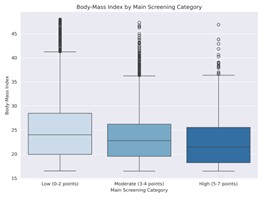
A higher NRS score in the main screening was strongly correlated with poorer clinical outcomes. These patients showed incr​​eased mortality, longer hospital stays, and higher readmission rates.

The following figure illustrates the ke​​y results of the analysis to date (as of September 2025):
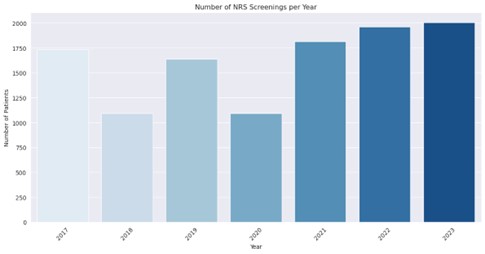


Figure 1: Number of patients who underwent nutritional risk screening (NRS screening) at UKL between 2017 and 2023. Illustration by the author.
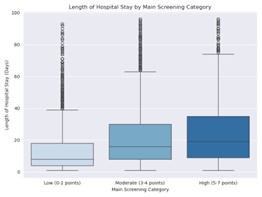


Figure 2:
 Length of inpatient stay depending on NRS score grouping
in the main screening


Figure 3:
 Body mass index depending
on NRS score grouping
in the main screening


Publicat​ions:

  • Pirlich, M., Schütz, T., Norman, K., Gastell, S., Lübke, H. J., Bischoff, S. C., Bolder, U., Frieling, T., Güldenzoph, H., Hahn, K., Jauch, K. W., Schindler, K., Stein, J., Volkert, D., Weimann, A., Werner, H., Wolf, C., Zürcher, G., Bauer, P., & Lochs, H. (2006). The German hospital malnutrition study. Clinical nutrition (Edinburgh, Scotland), 25(4), 563–572. Read paper
  • Schuetz, P., Fehr, R., Baechli, V., Geiser, M., Deiss, M., Gomes, F., Kutz, A., Tribolet, P., Bregenzer, T., Braun, N., Hoess, C., Pavlicek, V., Schmid, S., Bilz, S., Sigrist, S., Brändle, M., Benz, C., Henzen, C., Mattmann, S., Thomann, R., … Mueller, B. (2019). Individualised nutritional support in medical inpatients at nutritional risk: a randomised clinical trial. Lancet (London, England), 393(10188), 2312–2321. Read paper


NFDI4Health (10/2020 – 09/2025)​

NFDI4Health

Project Period: 10/2020 – 09/2025
Funding Agency: German Research Foundation (DFG)

Project Descriptio​n:

There is a large number of clinical trials, epidemiological studies and other medical research projects each year which collect data about probands and patients, their diagnoses and therapies, and the​ir environment according to a relevant research question. While the outcome of these research projects is often published, there is, however, no common way to publish metadata and data. Sometimes, metadata and data are not managed by a common format, such as Object Data Model or other available standards. Therefore, such data are often not findable, accessible, interoperable, and reusable. These FAIR criteria are immanent important making the research outcome transparent and reusable which is beneficial for medical research.

​The goal of NFDI4Health is overcom​​e these burdens by designing and implementing a concept for a federated research data infrastructure for personal health data. This work includes a common data structure for all this data, the federated data infrastructure itself, data protected / data privacy, and distributed analysis infrastructures allowing to include and compute the distributed data. We will show the functionality of all these aspects using a series of use cases.

Team memb​ers: 

Results and Public​​ations:

Further information and results can be found here​.

PILEA (08/2024 – 07/2025)

PILEA 

Project Period:  08/2024 –​ 07/2025 
Funding Agency: Federal Ministry of Health

Project Descriptio​​n:

Rare diseases (RD) are individually rare but affect more than 30 million people across the EU. In Germany and the EU, specialized centers have been established to ensure appropriate care. However, delays in diagnosis are common, as physicians often lack experience with rare diseases. Providing targeted support to physicians in referrin​​g patients to specialized centers is therefore crucial to improve diagnostic pathways.

The PILEA proj​ect builds on the previous Leuko-Expert project (10/2020–02/2024) and pilots the LeukoExpert app – a digital support system designed to assist neurologists in decision-making for leukodystrophies. Its aim is to explore the foundation for a sustainable and scalable use in clinical practice.

For the first time, the app is being tested under real-world conditions at MVZ Mittweida, a medical care center with an affiliated n​​etwork of practices in Central Saxony. The study focuses on systematically examining technical, organizational, and legal aspects to capture the implementation process and to enable long-term integration into everyday clinical workflows.

The scientific support provided by IFDT Leipzig, Leipzig University, and University of Leipzig Medical Center is intended​​ to deliver additional insights that will contribute to the further development of the application and make it transferable to other digital solutions in the field of rare diseases.

Team Members:

​Project Partners:

  • University of Leipzig Medical Center, Department of Neurology​ (Dr. rer. nat. Marie Blume, Dr. med. Eva Carolin Awißus, Dr. med. Christa-Caroline Bergner)
  • Institut für Digitale Technologien gGmbH (Prof. Dr. Kyrill Meyer)
  • Hygieia.net – MVZ Mittweida (Sebastian Pelz)

Resu​lts:

The app was successfully integrated into the practice management system of the participating practice network, demonstrating the feasibility of embedding digital tools into existing clinical workflows. Due t​o legal requirements, the AI-based decision support component remained inactive during the pilot phase. While this temporarily limited the full functionality of the app, valuable insights were gained regarding user engagement and workflow integration.

The seamless technical integration was well received by participating neurologists. Feedback highlighted the importance of AI functionality for enhancing motivation and perceived efficiency, indicating that future implementation with the active AI component could significantly increase adoption and clinical impact. Although some users initially perceived the app as time-consuming, objective usage data showed efficient interaction, suggesting that perceptions of time pressure in routine practice may influence engagement.

Participation was also naturally limited by t​​he rarity of leukodystrophies and the short pilot duration of three months. Overall, the findings em​​phasize that careful design and integration of digital tools can support clinical workflows while minimizing disruption, and they provide clear guidance for optimizing future deployment to maximize usability, engagement, and clinical benefit.

A detailed summary of the study results is av​ailable here ​(German version).

completed projects:

go to the overview page​​


Liebigstraße 18, Haus B
04103 Leipzig
Telefon:
+49 341 - 97 10283
Map