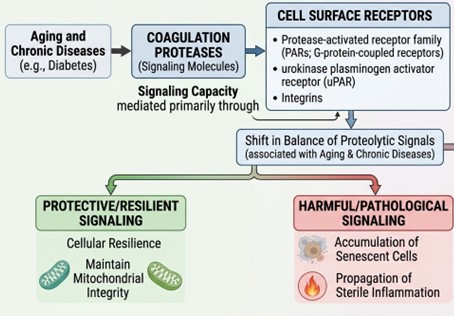
Coagulation proteases such as thrombin, factor XII (FXII) and activated protein C (aPC) serve as potent signaling molecules that regulate a vast array of physiological and pathological processes. The signaling capacity of these proteases is mediated primarily through the protease-activated receptor family (PARs; a group of G-protein-coupled receptors) in addition to other surface receptors such as urokinase plasminogen activator receptor (uPAR) and integrins. Aging and chronic diseases like diabetes are associated with a shift in the balance of these proteolytic signals. While certain proteases like aPC promote cellular resilience and maintain mitochondrial integrity, others like FXII and thrombin drive the accumulation of senescent cells and the propagation of sterile inflammation.
The focus of our research group is to understand the molecular mechanisms through which the coagulation proteases modulate mitochondrial function, cellular senescence and sterile inflammation in the context of aging and chronic diseases. Understanding these specific molecular mechanisms is critical to develop interventions that mitigate the progressive loss of organ function in this context.
Our
group employs different animal models and state of the art techniques such as
mitochondrial bioenergetic analyses, SASP profiling and high-resolution imaging
in addition to unbiased approaches such as bulk and single cell RNA sequencing.