Deutsche Version
Medical teams must make hundreds of decisions every day — under time constraints, with growing complexity and using ever-increasing amounts of data. Clinical Decision Support Systems (CDSS) are designed to continuously monitor patient data, detect diseases early, and provide automated recommendations.
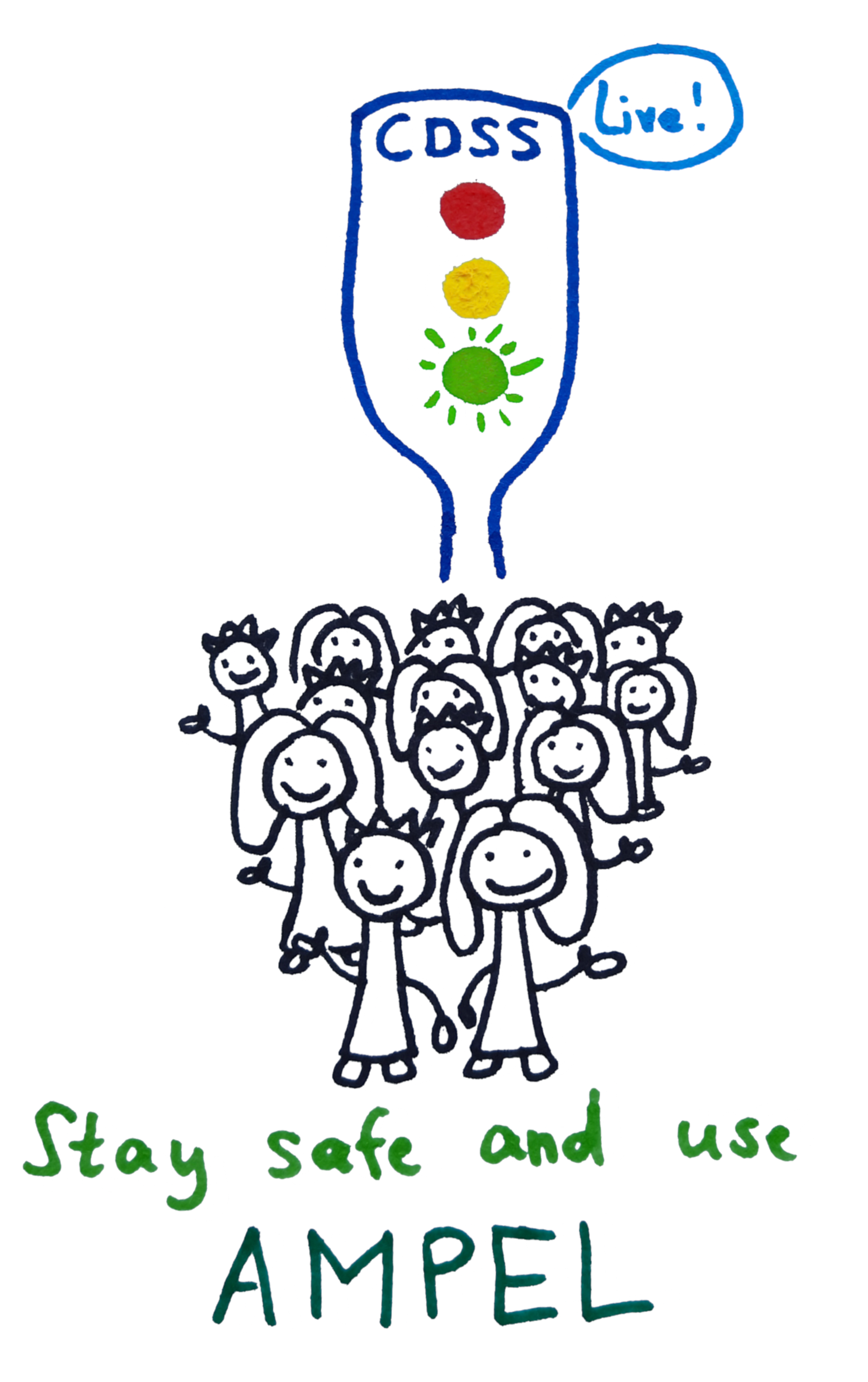 The non-profit AMPEL Platform supports university hospitals in the development and research of such AI systems. Since 2018, it has been continuously improved and scientifically vetted at the University of Leipzig Medical Center (UKL). The shared infrastructure will be released as open source software in 2026, at which point it can be used by other university hospitals.
A key feature of AMPEL is the real-time analysis of all patient data. This facilitates an immediate identification of undetected, medically critical conditions across all wards. One prime example is the refeeding syndrome: it occurs when severely malnourished individuals suddenly receive increased amounts of food or intravenous fluids. The body reacts with a shift of the mineral and salt balance, which can lead to cardiac arrhythmia, respiratory problems, and other life-threatening complications.
The evidence-based AMPEL algorithms identify such risks using available patient data, such as laboratory parameters, nurse records, and pre-existing conditions. If the results of the real-time analysis indicate a potential complication, such as refeeding syndrome, medical staff are alerted via email, phone, or the digital patient dashboard as needed.Subsequent necessary treatment steps can then be initiated immediately. More than half of all cases detected by AMPEL at UKL would have gone undetected without the system.
CDSS systems based on the AMPEL platform do not replace a medical diagnosis. They rather support the entire hospital staff by alerting them to complications that might otherwise be overlooked. This makes specialized medical expertise available to “everyone” — even in cases of rare and complex conditions. The final decision regarding the course of treatment always rests with the medical team.
Research to clinical practice
AMPEL is unique compared in comparison to many scientific projects in that its research results reach actual patients. The UKL is the first German university hospital to manufacture and operate its own CDSS called LAMPE. This in-house medical device, based on the AMPEL platform, facilitates not only the research on algorithms that improve patient safety, but also their application in routine care. Following successful studies, evidence-based algorithms are then activated for all patients with minimal effort. The scientific evidence gained also feeds back into the AMPEL platform and can be used as a starting point from which to improve patient safety at other hospitals as well.
Open Source for an Evidence-Generating and Non-Profit AI Infrastructure
The AMPEL platform is currently being expanded as an open-source project — with the highest standards of transparency, interoperability, and adaptability. The goal is to establish an evidence-generating AI infrastructure that can be used as a starting point for research and patient care at multiple university hospitals. In a first step tests are being conducted in cooperation with the University and University Hospital Dresden to determine how the platform can be prototypically transferred to other hospital infrastructures. The AMPEL team has also founded the German-wide Clinical Decision Support Network. The growing network intends to pool experience, integrate external innovations, and sustainably accelerate the development of evidence-based clinical decision support systems.
> Overview [Research]
> News





This project is funded with tax revenues based on the budget adopted by the members of the Saxon State Parliament (eHealthSax 2018-2022 and 2025-2027 and was previously funded by the European Unit (NextGernerationEU).